
In the last decade, live shopping has undergone a remarkable transformation from a localized Asian retail phenomenon to a global digital commerce strategy. The journey began in China, where platforms like Taobao and WeChat pioneered the concept, turning online shopping into an interactive, entertainment-driven experience.
Chinese consumers embraced live streaming as a way to connect with sellers, see products in real-time, and make instant purchasing decisions. In 2023, live shopping in China accounts for 19.2% of the country’s total online retail, with total sales reaching $562.62 billion. It’s no coincidence that 8 out of 10 people in 2023 have made at least one purchase using live shopping.

Initially, Western markets viewed this trend with skepticism. The concept seemed alien to traditional eCommerce models that prioritized static product pages and impersonal shopping experiences. Retailers wondered how the high-energy, host-driven approach of Asian live shopping would translate to Western consumer behaviors.
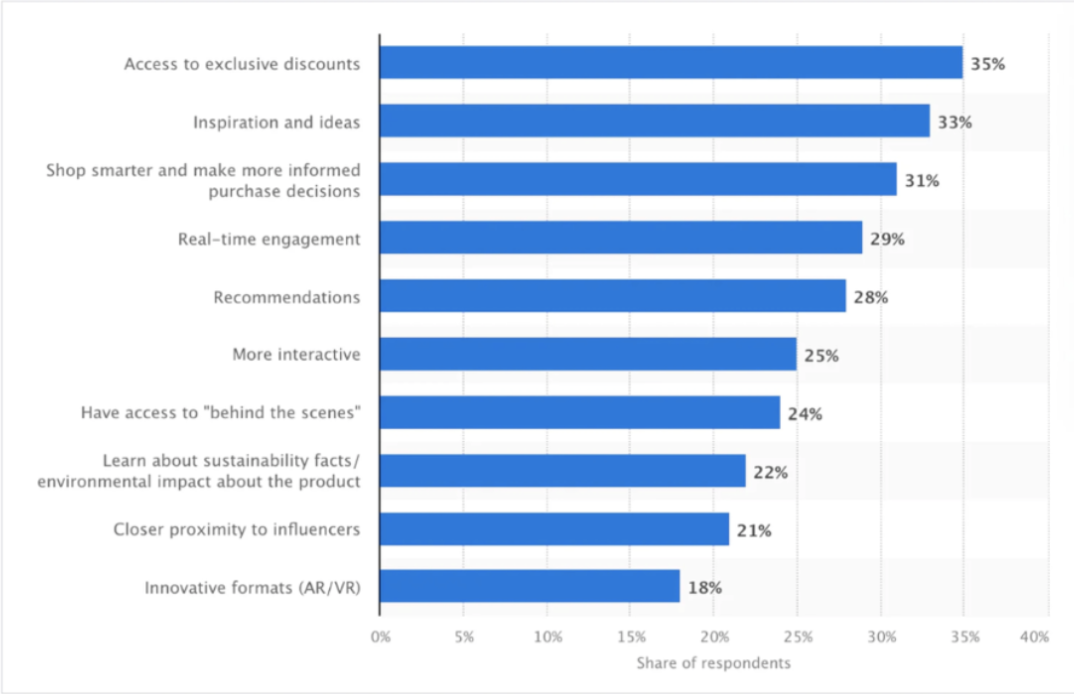
Certainly the great results achieved in China and the enthusiasm of the most curious consumers have driven the largest brands to rely on this format. What primarily drives consumers to approach live shopping is the possibility of accessing exclusive discounts, along with the opportunity to receive enough information to make informed purchases.
The remarkable growth of live shopping reflects a transformative shift in digital retail consumption across Western markets. Consumer enthusiasm has driven this innovative shopping format from a niche trend to a mainstream phenomenon in both the United States and Europe.
The main attractions for consumers in live shopping are the ability to access exclusive discounts and receive comprehensive product information that enables them to make well-informed purchasing decisions.
Source: Statista
In the American market, projections suggest a substantial economic impact, with anticipated revenues approaching $55 billion by 2026. This forecast underscores the significant potential of live shopping as a robust commercial channel. The projected figure represents more than just monetary value; it indicates a fundamental change in how consumers interact with brands and make purchasing decisions.
Similarly, the European market demonstrates impressive growth with 82% of users trying live shopping for the first time in 2023.
As data shows, the live shopping phenomenon continues to demonstrate remarkable resilience and adaptability in the digital marketplace. Far from being a passing trend, it has proven to be a dynamic and evolving form of commerce that consistently reinvents itself through technological innovation.
Each year, emerging technologies breathe new life into the live shopping experience. As the live shopping landscape continues to rapidly transform, staying ahead of the curve requires a strategic understanding of the emerging trends that will define the digital retail experience in 2025. Identifying and anticipating these key developments is crucial for businesses looking to remain competitive and innovative in this dynamic market.
The Impact of AI on Live Shopping
In the dynamic world of live shopping, success hinges on more than just understanding your performance—it’s about selecting the right technological infrastructure that can capture and interpret the nuanced metrics driving your digital sales strategy. The spread of artificial intelligence has transformed this landscape, offering unprecedented insights into live streaming commerce.
The true power of AI-enhanced live shopping platforms lies in their ability to deliver instantaneous, granular insights. They can track different relevant metrics like viewer engagement, real-time conversion rates, audience sentiment or product interaction.
Unlike traditional analytics that offer retrospective data, these enhanced platforms provide real-time feedback, allowing content creators and businesses to make immediate, data-driven decisions. By integrating sophisticated AI models, live shopping platforms are transforming from passive observation tools to proactive strategic partners. They enable businesses to not just measure performance, but to dynamically optimize their live shopping experiences, turning data into actionable intelligence that directly impacts revenue and audience engagement.
AI-powered live shopping platforms like GOLIVE are at the forefront of a transformative digital revolution, demonstrating how technological innovation is reshaping interactive commerce. By leveraging real-time AI-driven metrics, platforms like GOLIVE are setting a new industry standard, inspiring other companies to follow suit.
How the AR can revolutionize Live Shopping
The evolution of live shopping represents a pivotal transformation in eCommerce, driven by innovative technological solutions that directly address historical consumer concerns about online purchasing.The traditional online shopping experience often left customers uncertain about fit, appearance, and suitability—a barrier that deterred many from making confident purchases.
Technological advancements have dramatically reshaped this landscape. Cutting-edge virtual try-on technologies have emerged as game-changing solutions, particularly in fashion and beauty sectors. Thanks to technological advancements, it will be possible to bridge the gap between in-store and online shopping experiences, allowing people to virtually try on products showcased in live streams.
These sophisticated technologies leverage augmented reality (AR) and artificial intelligence to create immersive, personalized shopping experiences. Thanks to virtual try on filters, it is possible for customers to live a fully in-store experience from the comfort of their home.
The primary objective of integrating advanced technologies into live streaming platforms is to empower customers with more confident purchasing decisions. By enabling virtual product trials, these innovative solutions directly address the inherent uncertainty of online shopping.
This approach transforms the digital shopping experience from a speculative guessing game to an interactive, informative journey. In fact, the technology acts as a bridge between digital browsing and the tangible experience of in-store shopping, allowing customers to make more informed choices, consequently increasing customer satisfaction.
As time goes on, more and more companies are investing in this technology to enhance customer experience. This is in fact, an increasing trend which companies should focus on to gain competitive advantage and improve their business.

On the side of Sustainable Brands
Live shopping has emerged as far more than a transactional sales channel—it has become a sophisticated communication platform that allows brands to authentically engage with consumers while aligning with critical contemporary values such as transparency and sustainability.
The structure of live shopping creates an unfiltered environment where brands can demonstrate their genuine commitment to ethical practices and environmental responsibility. Unlike traditional marketing channels that often rely on curated messaging, live shopping offers real-time, transparent interactions that enable brands to showcase their sustainability initiatives directly to consumers.
For example, live shopping platforms enable eco-friendly brands to storytell their sustainability efforts. Whether highlighting eco-friendly manufacturing processes, showcasing recycled materials, or explaining ethical sourcing strategies, brands can transform sustainability from an abstract concept into a tangible, engaging narrative.
Moreover, by utilizing live shopping as a communication tool, brands can achieve a positive environmental impact. Consider the impact of traditional e-commerce, which is subject to frequent returns that contribute to increased costs and unnecessary carbon emissions. Live shopping directly addresses this challenge by providing immersive, interactive product experiences that dramatically reduce return rates. Through detailed, real-time product demonstrations, size comparisons, material explanations, and immediate customer interactions, brands can help consumers make more informed purchasing decisions.
Given the increasingly growing consumer attention towards more sustainable actions and attitudes, brands will need to embrace this new consumer necessity by redefining their communication and marketing strategy.
B2B commerce: A new frontier for Live Shopping
While live shopping has predominantly been associated with business-to-consumer (B2C) markets, its potential in business-to-business (B2B) commerce is increasingly being recognized as a powerful engagement and sales strategy.
B2B companies are discovering that live shopping platforms can transform traditional, often impersonal sales processes by creating interactive, real-time product demonstrations and networking opportunities. These platforms enable businesses to showcase complex products, offer technical demonstrations, provide in-depth consultations, and facilitate direct communication between manufacturers, distributors, and potential corporate clients.
By leveraging interactive features like real-time Q&A, instant product customization discussions, and immediate technical support, B2B live shopping platforms can compress sales cycles, build trust through transparent communication, and offer a more engaging way to evaluate and purchase professional solutions.
Conclusion
The future of live shopping is not just about selling products, but creating immersive, interactive experiences that prioritize customer engagement, transparency, and sustainability. As time progresses, live shopping platforms are turning this temporal evolution into their greatest strength, adeptly leveraging new technologies and swiftly incorporating them into their platforms.
By quickly identifying, testing, and implementing cutting-edge technologies, live shopping platforms continuously enhance user experience, increase engagement, and provide increasingly sophisticated tools for brands and consumers.
In order to effectively use live shopping and execute a successful marketing strategy, it is crucial to choose a platform that is always up-to-date.
GOLIVE, an AI-driven platform, offers significant insights to gauge the performance of live broadcasts. Its user-friendly interface allows users to instantly visualize most relevant metrics to evaluate your live event performance.
Stay ahead of the curve, start your journey with GOLIVE now!