
Augmented reality, once confined to science fiction, is now a tangible technology accessible to many. But what do we mean by augmented reality?
Generally, we define augmented reality (AR) as the technology capable of adding digital elements to the physical world. To access augmented reality experiences, in most cases, a mobile device like a smartphone or tablet is sufficient. Their wide distribution allows everyone to easily access AR experiences, thanks to integrated cameras
From Gaming to eCommerce: The Impact of AR
While Snapchat filters certainly contributed to popularizing the concept of augmented reality, Pokémon GO was the true catalyst for its revolution. Launched in 2016, this mobile game demonstrated how technology could transform the real world into an interactive gaming arena, opening up endless possibilities. Its release created a cultural earthquake, irrevocably drawing everyone’s attention to these technologies.
In the following years, AR integration in apps became increasingly common, with companies exploring new potential applications for this technology. It’s not difficult to imagine how cosmetics brands immediately recognized AR’s potential. It was precisely through their initial experimentation that the first steps were taken towards a collaboration between shopping and AR.
Sephora is one of the pioneers in applying AR to marketing strategies through the dissemination of try-on filters. In fact, the app offers customers a Virtual [Make up] Artist that, by scanning the face, is able to recommend the most suitable products for the skin tone, thanks to the combination of AI and AR.
The ability to experiment with new looks and products, sitting on your own couch and simply using your smartphone’s camera, has made these filters essential for ensuring a better and more satisfying online shopping experience.
The development and dissemination of try-on filters have thus marked the beginning of a true revolution in the way we purchase products. Since then, this technology has made giant strides, becoming not only more accurate but also more widespread.
After the initial interest from the beauty sector, the race for innovation has also involved other industries, eager to offer increasingly immersive shopping experiences.
This is the case of IKEA, a well-known furniture company. In 2017, it launched IKEA Place (later integrated into the main IKEA app), which allowed users to visualize furniture and accessories directly in their homes, thanks to augmented reality.
But IKEA, although one of the first, certainly wasn’t the last.
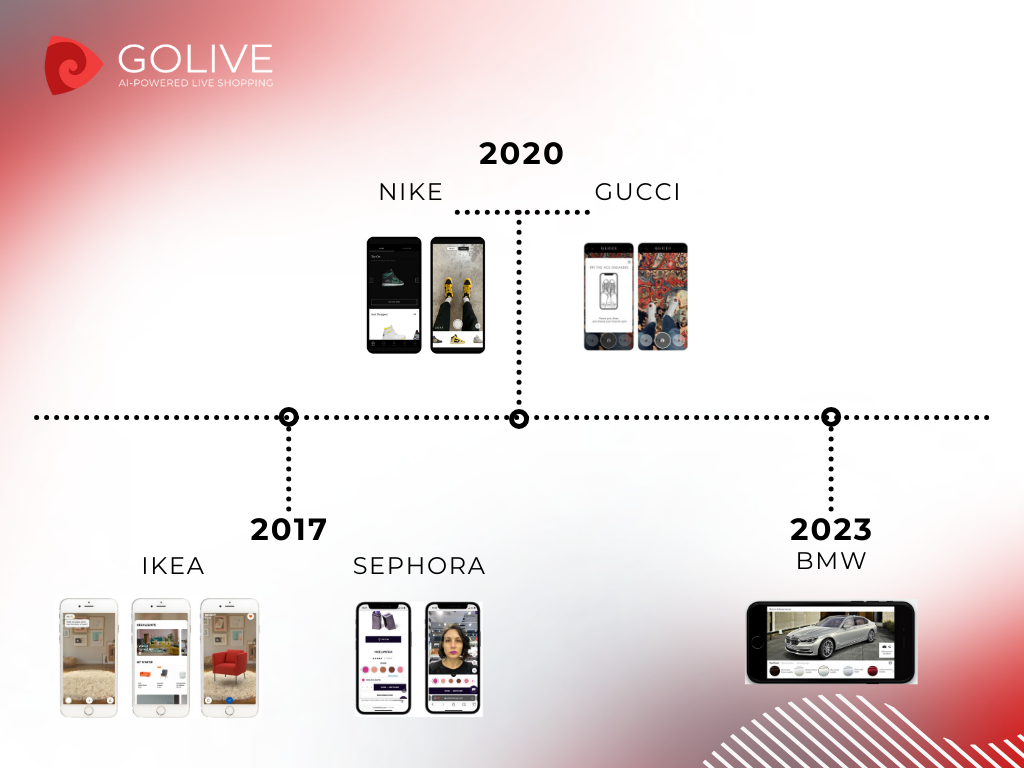
These are just some of the brands that have adopted AR as a new strategy to implement the eCommerce experience for their users.
In 2020, both Nike and Gucci made their debut in the AR field by incorporating this technology into their apps, allowing consumers to try on sneakers comfortably from home, simply using their phone.Not only fashion, furniture, or beauty brands, but also automotive ones.
For example, BMW, since 2023, allows anyone who downloads the app to visualize and modify the look and feel of a car to their liking.
Certainly, the choice to integrate AR into their marketing strategy has been driven by the multiple benefits that an immersive and interactive shopping experience brings to both businesses and consumers, who will inevitably be more satisfied with their purchases.
By adopting this solution, companies in all sectors can find various benefits, such as:
- increased engagement;
- increased conversion rate;
- increased sales;
- reduced returns
But what other format, developed in recent years, is capable of giving us similar results? Live shopping.
How AR and Live Shopping can work together
If the goal is to replicate the in-store shopping experience, where customers can interact with products and receive personalized advice, why not leverage the potential of live shopping and try-on filters to create an equally engaging and rewarding virtual environment?
Speaking of in-store shopping, the first thing that comes to mind is human interaction: if you can’t find a size or if an item exists in other colors, you look for a sales assistant who can help you.
When we shop online, we would like to have the same opportunity to interact with someone who knows the product better than we do and can help us make a choice we are fully satisfied with. All of this is part of the Live Shopping experience. During a shoppable live stream, experts can answer customer questions, provide style advice, and assist in choosing sizes and colors, just like a retail assistant would in a store.
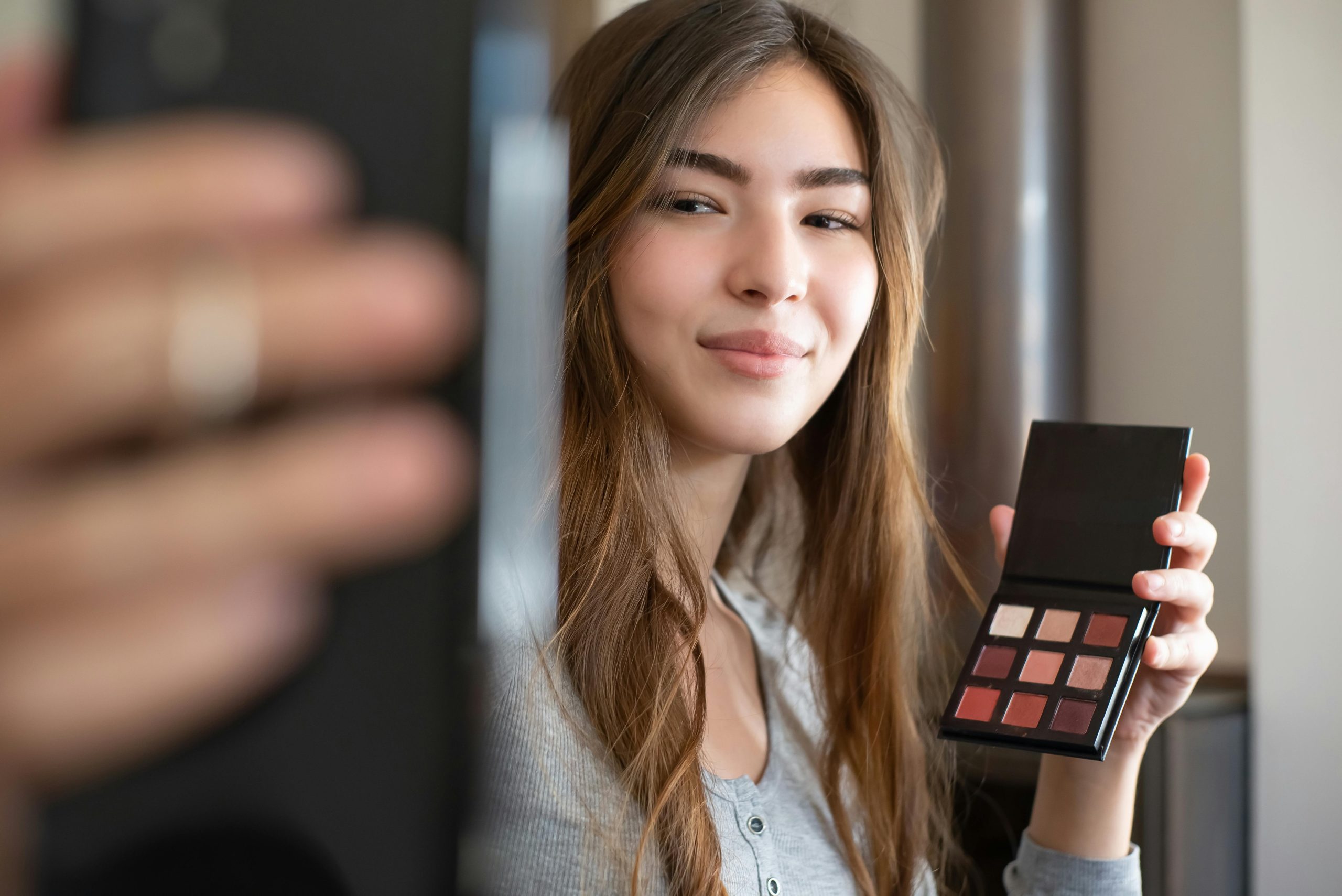
The live shopping experience can now be enhanced by augmented reality virtual try-ons, allowing viewers to virtually try on the products previously shown.
The synergy between the two technologies offers users a unique opportunity to discover new styles, resolve any last doubts, and create custom outfits, guaranteeing a complete and satisfying shopping experience.
The virtual try-on fits into a live shopping experience as its completion, a decisive factor in the purchase decision.
The combination of these two methodologies allows us to increasingly narrow the line that separates the in-store experience from the online one, offering us a future where digital experiences are deeply intertwined with our daily lives.
Take the first step into the future with GOLIVE
GOLIVE is the AI- powered platform that brings the excitement of live streaming to the world of e-commerce. By combining the power of real-time video with interactive features, GOLIVE creates a more engaging and personalized shopping experience for both consumers and businesses.
Find out more on our website!